

Wildlife Removal · Mississauga, ON
Skunk Removal in Mississauga, ON: What Homeowners Should Know
Skunk living under your Mississauga deck or shed? Learn the signs and the risks, and how Greater Wildlife Control removes skunks humanely for good.
Introduction
Professional skunk removal in Mississauga involves humane trapping on rare occasions, but the most popular eviction method is the installation of wire meshing and setting a one-way door exclusion, and biohazard sanitization carried out by licensed wildlife control specialists who understand both provincial regulations and local denning patterns. If you’re dealing with skunks under your deck, porch, or shed, the process typically starts with a thorough inspection, followed by safe removal using humane methods, structural exclusion to seal entry points, and cleanup of contaminated areas.
This guide covers everything Mississauga homeowners need to know about professional skunk removal services-from understanding skunk behavior and seasonal nesting habits to navigating Ontario’s wildlife regulations, identifying structural vulnerabilities on your property, and evaluating removal costs. It does not cover DIY trapping methods (which carry significant legal and safety risks), nor does it address pest control for other animals like insects or rodents. If you’re dealing with raccoon removal, squirrel removal, bat removal, or bird removal, the principles of humane wildlife removal overlap but the techniques and timelines differ.
Skunks are classified as furbearing mammals under Ontario law. Municipal services in Mississauga do not remove healthy wildlife from private property-homeowners must engage a licensed wildlife removal company for safe removal and permanent solutions. The city itself recognizes skunks as part of Mississauga’s urban wildlife profile and directs residents to private, licensed professionals.
By reading this guide, you will gain:
-
A clear understanding of skunk denning behavior and seasonal patterns specific to the Mississauga area
-
Knowledge of Ontario’s legal framework governing wildlife removal, relocation limits, and humane treatment
-
The ability to identify structural vulnerabilities on your property that attract skunks and other wildlife
-
Insight into professional removal methods, including one-way doors, live trapping, and exclusion installation
-
Realistic cost expectations and timelines for complete skunk removal, exclusion, and biohazard cleanup
Understanding Skunk Behavior and Seasonal Patterns in Mississauga
The striped skunk is the species homeowners across southern Ontario encounter most frequently. These creatures are semi-fossorial-they dig shallow burrows for shelter, predator evasion, and raising their young. Mississauga’s suburban landscape, with its mix of residential properties, green corridors along the Credit River valley, lakeshore areas, and fragmented forest patches, creates ideal conditions for skunks to move between natural habitats and human structures. Skunks often burrow under porches and decks, precisely the kinds of structures abundant across the city’s residential neighborhoods.
Urban development continues to push wild animals into closer contact with humans. Many Mississauga residents have reported seeing more skunks than usual in recent years, particularly juvenile skunks dispersing during summer months. Habitat loss from ongoing construction and infill development compresses available territory, driving nuisance wildlife into backyards, under houses, and into contact with pets and humans.
Seasonal Nesting and Activity Patterns
Understanding when skunks are most active-and most vulnerable-is essential for timing any removal intervention correctly. The timing of interventions is crucial; never block dens during the primary breeding season.
February–March (Mating Season): Skunk activity increases dramatically during mating season in Mississauga. Males roam widely-skunks can travel up to 50 km in search of a new home-and females become more visible during daytime hours. Homeowners often first notice skunk problems during this period due to the strong musky odor near denning sites.
April–May (Birthing and Denning): After a 60-day gestation period, females give birth to litters of 4–7 kits in established dens. During this window, professionals should check for baby skunks before sealing entrances or using one-way doors. Sealing entry points should be avoided during the birthing season to prevent orphaning young kits, which is both unethical and can create secondary problems like decomposition odors and biohazard contamination inside structures.
Summer (Peak Foraging): Skunks forage heavily during summer nights, targeting lawn grubs, insects, pet food left outdoors, bird seed beneath feeders, and unsecured garbage. Homeowners may notice cone-shaped holes in their lawns-a telltale sign of skunk foraging activity.
Fall (Dispersal): Young skunks leave their mothers and establish new territories as food sources diminish heading into winter. This dispersal period brings juvenile animals into new neighborhoods, often triggering fresh wildlife intrusion complaints across other areas of the city.
Health Risks and Biohazard Concerns
Skunks are primary carriers of rabies and leptospirosis, making any encounter with these animals a legitimate health concern. Rabies is almost certainly fatal once symptoms appear in humans, and Ontario classifies skunks as a significant rabies vector species. Friendly skunks may indicate rabies infection-an unusually docile or disoriented skunk active during daylight hours should never be approached.
Skunks can carry leptospirosis, a bacterial disease transmitted through urine that contaminates soil and water sources around denning areas. Skunks may harbor various parasites harmful to humans, including roundworms and fleas that can transfer to pets and household environments.
Den sites contaminated with feces, urine, and nesting material present ongoing biohazard conditions even after the animals have departed. Pheromone residuals embedded in structural materials can also attract new wildlife to the same location if not properly addressed through professional sanitization.
These health risks underscore why professional intervention-not DIY approaches-represents the safest path for Mississauga homeowners dealing with skunk issues.
Structural Vulnerabilities and Common Denning Sites
Skunks select denning locations based on three factors: shelter from weather and predators, proximity to food sources, and ease of excavation. Most residential properties in Mississauga present at least one structural vulnerability that meets these criteria.
Deck and Porch Vulnerabilities
Elevated decks and porches are the most common denning sites requiring wildlife removal needs and services in the Mississauga area. The base material-typically exposed soil or mulch-allows easy digging, and many decks lack proper skirting or lattice barriers at ground level. Foundation gaps as small as four inches provide sufficient entry for an adult skunk.
Once established, skunks dig side tunnels beneath decks, expanding the den system and making exclusion more complex unless the entire perimeter is addressed. Soil grade that slopes toward the structure creates natural voids, and adjacent landscaping features can bridge access points that homeowners don’t immediately recognize. Damaged lattice work, rotted boards, and gaps between the deck frame and the house foundation are all common entry points that a thorough inspection will reveal.
Shed and Outbuilding Entry Points
Sheds and outbuildings often sit on minimal foundations-sometimes directly on grade-leaving gaps between the structure’s base plates and the ground. Floor vents, deteriorated plywood panels, and gaps around doors all provide access for skunks and other animals including raccoons and squirrels.
Storage items inside sheds create sheltered micro-environments that skunks find attractive. Garden supplies, pet food stored in bags rather than sealed containers, and accumulated debris all contribute to making these structures appealing den sites. Ventilation openings designed for airflow become wildlife entry points when screens deteriorate or are absent entirely.
Landscape Features That Attract Skunks
Beyond structural openings, several landscape features on your property can draw skunks in. Brush piles, rock gardens, and overgrown vegetation provide shelter and attract the insects and grubs that skunks feed on. Bird feeders-especially those that scatter bird seed on the ground-create reliable food sources. Fallen fruit from trees, unsecured garbage bins, and pet food left outdoors all serve as powerful attractants.
It’s important to make properties less attractive to skunks by tidying yards and removing debris. Food sources should be eliminated to reduce skunk attraction to residential properties. A well-maintained yard contributes to long-term prevention of skunks and other wildlife, forming the foundation of any effective exclusion strategy.
Understanding these vulnerabilities is the first step; the next is knowing how professional wildlife removal services address them systematically and rid your property of nuisance wildlife.
Skunk Removal Process and Methods
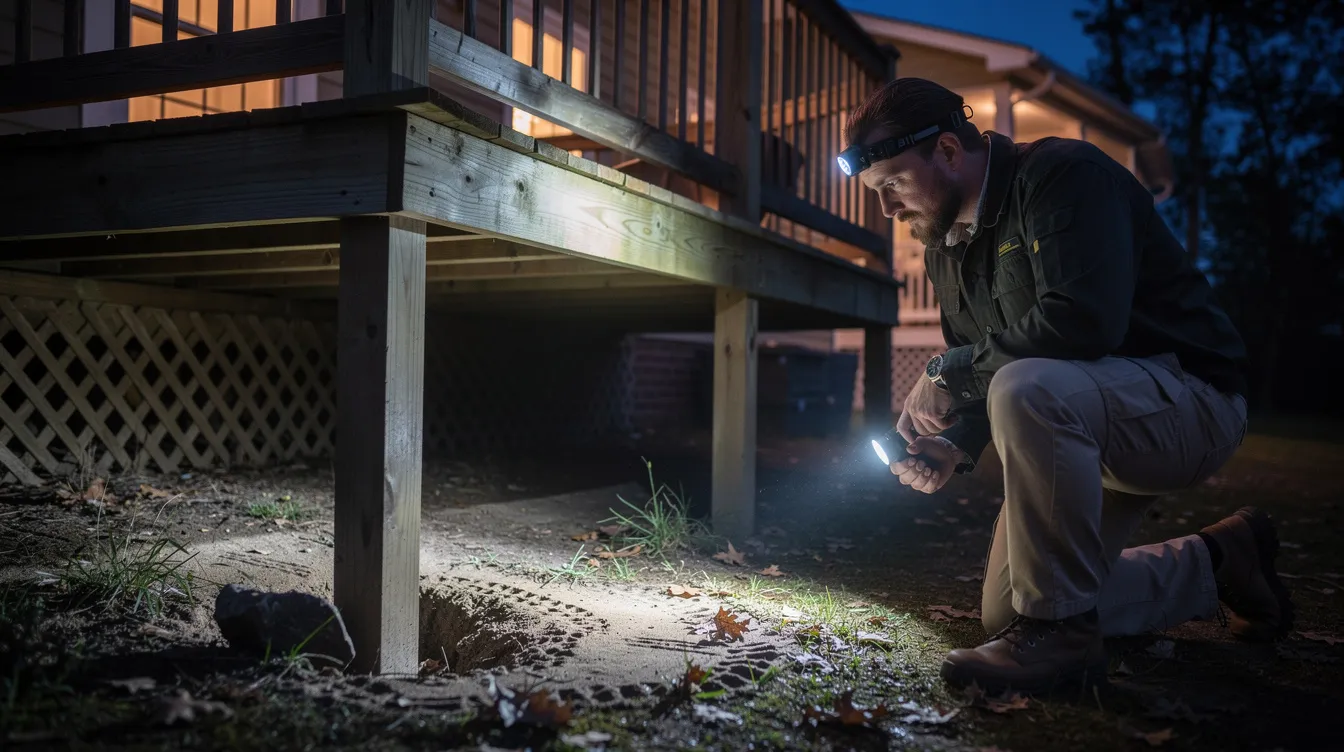
Licensed wildlife removal services in Mississauga follow a structured, multi-phase process that prioritizes animal safety while delivering permanent solutions for homeowners. Professional skunk removal services use humane methods at every stage, from initial assessment through final exclusion. Legal restrictions exist for wildlife removal in Mississauga, and experienced teams ensure full compliance with provincial and municipal regulations.
Initial Assessment and Inspection Protocol
A professional assessment becomes necessary whenever homeowners notice signs of skunk activity-musky odors near foundations, cone-shaped lawn damage, tracks near structures, or visual sightings at dusk. Wildlife removal services in Mississauga prioritize animal safety from the first contact.
The inspection process includes:
-
Perimeter walkthrough to identify all active den sites, burrow entrances, and secondary exit points around the property
-
Structural evaluation using visual inspection and, in some cases, thermal imaging or infrared cameras to detect heat signatures indicating active dens
-
Assessment of family groups to determine whether dependent kits or babies are present-this step is critical during spring months and directly affects removal timing
-
Documentation of contamination including feces accumulation, urine staining, insulation damage, and biohazard conditions requiring sanitization
Companies like Gates Wildlife Control, with over 40 years of experience in the Greater Toronto Area, and Brilliex Pest Control, which uses humane methods for wildlife removal, exemplify the professional standard that Mississauga homeowners should expect from any wildlife removal company they engage.
Humane Removal Techniques Comparison
The two primary humane removal techniques used in professional skunk removal are one-way door systems and live trapping. Each has distinct advantages depending on the situation. Humane methods include one-way doors for animal removal, which is the preferred approach in most Mississauga cases.
| Criterion | One-Way Door Systems | Live Trapping |
|---|---|---|
| Effectiveness | High when entry/exit points are consolidated; animals leave naturally | Can capture individuals but may miss others in multi-animal dens |
| Stress to Animal | Minimal-skunk exits on its own schedule | Higher-confinement increases spraying risk and animal distress |
| Spray/Odor Risk | Low-no direct handling or confinement | Elevated-trapped skunks frequently spray |
| Legal Compliance | Fully aligned with Ontario wildlife regulations | Requires licensed trapper; relocation limited to 1 km radius |
| Cost | Materials + installation labor; typically more cost-effective | Higher labor costs due to daily trap checks and monitoring |
| Best Suited For | Established dens without dependent kits present | Situations requiring immediate removal or multiple animals |
Under Ontario regulations, healthy wildlife cannot be relocated more than 1 kilometer from capture. Captured animals must be released within 24 hours unless injured or orphaned, in which case they must be delivered to an authorized wildlife rehabilitator. Use one-way doors to allow animals to exit without returning-this approach is the industry standard because it minimizes stress, reduces spray risk, and maintains full legal compliance.
For most Mississauga homeowners, professionals recommend one-way door exclusion as the primary technique, reserving live trapping as a last resort for situations where exclusion alone cannot resolve the problem.
Exclusion and Prevention Installation
Once skunks have vacated the den through the one-way door system, permanent exclusion work begins. This phase transforms a temporary removal into a lasting solution.
Physical barriers: Install ¼” wire mesh-preferably heavy-gauge galvanized steel (16-gauge or better)-around foundation perimeters, under decks, and at shed bases. Skunks can chew through lighter materials or dig around thin barriers, so material quality matters. Seal entry points to prevent wildlife from re-entering homes, including gaps around vents, deteriorated skirting, and chimney openings.
Structural repairs: Replace damaged lattice, repair foundation gaps, install chimney caps and vent screens, and reinforce any compromised access points identified during the initial inspection.
Landscape modifications and preventive measures:
-
Secure garbage bins to eliminate food sources for skunks
-
Avoid feeding pets outside to deter skunks and wildlife
-
Remove brush and rock piles that provide shelter
-
Lawn treatment can reduce grubs, which are a food source for skunks
-
Clear fallen fruit and bird seed accumulations beneath feeders
-
Neighborhood lighting can help deterring skunks from approaching structures at night
-
Motion-activated deterrents can discourage skunks from visiting properties
-
Restore soil grade so drainage flows away from foundations rather than creating voids
These preventive measures work together to protect your property from future wildlife intrusion-not just from skunks but from raccoons, squirrels, bats, and other wildlife that exploit similar vulnerabilities.
Common Skunk Removal Challenges and Solutions
Even with professional intervention, certain complications arise regularly in skunk removal across the Mississauga area. Understanding these challenges helps homeowners set realistic expectations for the process.
Mother Skunks with Dependent Kits
The most sensitive removal scenario involves a nursing mother with dependent babies in a den during the spring birthing season. Professionals should check for baby skunks before sealing entrances or using one-way doors-installing a one-way exclusion device while kits remain inside can result in orphaned young that die within the structure, creating decomposition odors and serious biohazard conditions.
Experienced teams address this by using observation, camera monitoring, or careful den inspection to confirm whether kits are present. When they are, the den may need to remain temporarily accessible until the young are mobile enough to follow the mother through a one-way door system. This process requires patience and expertise-it’s a primary reason that qualified wildlife control during spring months takes longer than at other times of year.
Multiple Den Sites and Repeat Infestations
A single exclusion effort often fails when skunks have established multiple burrow systems across a property-for example, one den under the deck and another beneath the shed. Without a comprehensive property survey addressing all den sites simultaneously, animals simply relocate to the next available shelter on the same private property.
Long-term success requires full-perimeter exclusion combined with ongoing monitoring. Many wildlife removal companies offer seasonal inspection programs-typically spring and fall checks-to catch new vulnerabilities before they become active den sites. Maintaining these barriers and conducting annual inspections is the difference between a one-time fix and recurring nuisance animal problems.
Spray Contamination and Odor Remediation
When skunks spray inside or near a structure, the sulfur-based compounds penetrate porous materials-wood framing, insulation, carpeting, and even soil-creating odors that can linger for months without professional treatment. This is frequently cited by Mississauga homeowners as one of the most frustrating aspects of dealing with skunk problems.
Professional odor remediation involves removing contaminated insulation and nesting material, applying ozone or peroxide-based treatments to affected surfaces, sealing wood that has absorbed spray compounds, and replacing materials that cannot be salvaged. Pheromone and scent residuals must be fully eliminated; otherwise, they function as signals that attract new skunks and other creatures to the same location, undermining the entire removal and exclusion job.
Conclusion and Next Steps
Professional skunk removal remains the safest and most effective solution for Mississauga homeowners contending with these nuisance animals. Licensed wildlife removal services combine humane removal techniques, legal compliance with Ontario’s wildlife regulations, structural exclusion using durable materials, and biohazard cleanup to deliver results that protect both the well being of homeowners and the animals themselves. Maintaining a healthy ecosystem in urban-suburban environments like Mississauga means managing human-wildlife conflicts responsibly rather than resorting to harmful or illegal methods.
If you suspect skunk activity on your property, take these immediate steps:
-
Do not approach or attempt to trap the animal yourself-contact a licensed wildlife removal company in the Mississauga area for a professional consultation
-
Schedule a thorough inspection of your property’s perimeter, focusing on decks, porches, sheds, and foundation gaps
-
Remove food attractants immediately: secure garbage, bring in pet food, clean up bird seed and fallen fruit
-
Plan for prevention by discussing permanent exclusion options and seasonal monitoring with your chosen removal services provider
For ongoing property protection, consider exploring related topics including seasonal wildlife management for raccoons, squirrels, and bats, annual property maintenance to address new structural vulnerabilities, and landscape management practices that reduce attractants for all nuisance wildlife species across the Greater Toronto Area.
Frequently Asked Questions
Is skunk removal legal in Mississauga and what permits are required?
Yes, skunk removal is legal in Mississauga. Under Ontario’s Fish and Wildlife Conservation Act, property owners may harass, capture, or kill wildlife damaging their property. Skunk dens are specifically exempted from needing ministerial approval for destruction-no special permit is required. However, if you hire a wildlife agent, they must be a licensed trapper, a business whose primary work is wildlife removal, or a municipal employee in animal control. Body-gripping traps, poisons, or firearms may require additional licensing. Municipal services in Mississauga do not remove healthy wildlife from private property, so homeowners must engage private licensed professionals.
How much does skunk removal cost in Mississauga?
Basic humane removal packages-including initial trapping or one-way door installation with limited exclusion-start around CAD $299 in Mississauga. Comprehensive exclusion work covering all entry points, vent screening, and chimney caps typically runs from CAD $599 and up, often with warranties ranging from one year to lifetime coverage depending on the provider. Biohazard cleanup and sanitization-including waste removal, decontamination, insulation replacement, and odor elimination-is priced separately, generally starting around CAD $499 depending on scope. The municipal Animal Services fee for wildlife removal situations is approximately $131.12 plus 13% HST, though this applies in limited contracted circumstances.
What time of year is best for skunk removal services?
The optimal window for skunk removal is late summer through fall, after the spring birthing season has passed and before animals begin seeking winter shelter. Removal during February–March (mating season) can be effective but involves heightened skunk activity and spray risk. April–May is the most challenging period because mothers are nursing dependent kits, and sealing dens during this window risks orphaning young. If you notice activity during the birthing season, contact a professional immediately-they can assess whether babies are present and develop a timeline that accounts for the animals’ development.
How long does the complete removal and exclusion process take?
For straightforward cases involving a single den with few entry points, expect 2–3 working days spread across sequential steps: inspection on day one, one-way door or trap installation on day two, and exclusion sealing once the animal has departed. More complex infestations involving multiple den sites, extensive structural damage, or significant odor contamination can extend the process to several weeks, including monitoring, phased exclusion, and thorough biohazard remediation. Seasonal timing affects duration-spring removals involving family groups with babies take longer due to the need to wait for kits to become mobile.
Do removal companies offer guarantees against skunk return?
Most reputable wildlife removal companies in Mississauga offer guarantees tied to their exclusion work. Basic service packages typically include a 30-day guarantee, while comprehensive exclusion installations-covering all identified entry points with galvanized steel mesh and structural repairs-often come with warranties of one year or even lifetime coverage. The strength of any guarantee depends on the thoroughness of the exclusion work performed. Homeowners should verify warranty terms in writing and understand that guarantees typically require maintaining the preventive measures recommended by the company, including securing food sources and keeping the property free of attractants.
Get a free quote
Book Skunk Removal in Mississauga
Need skunk removal in Mississauga, ON? Share a few details and a local, experienced technician will call you back — usually the same day.
Your contact details
We'll use this to call you back.