
Bats are the only flying mammals in the world, and in North York, they frequently move into residential attics and chimneys that offer dark, warm, sheltered conditions similar to natural caves. While bats play a role in controlling insect populations by consuming pests like mosquitoes and beetles, a bat infestation inside your house creates measurable health risks, structural damage, and legal complications that demand prompt, professional action.
Key Takeaways
-
In North York neighbourhoods like Willowdale, Don Mills, and Bayview Village, bat species such as big brown bats and little brown bats commonly use attics and chimneys as roosting sites. Bats can squeeze through openings as small as 1 to 1.6 centimeters around rooflines, soffits, and chimney flashing; a thorough inspection of the full exterior at roof level is the only way to locate all entry points.
-
Never handle bats or bat droppings. Bat guano can transmit histoplasmosis when disturbed, and bats are a primary carrier of rabies in Ontario. Contracting rabies from a bat bite requires immediate medical attention. Contact licensed wildlife removal services rather than attempting DIY removal.
-
Humane removal relies on one-way exclusion devices (batcones, exclusion tubes) installed outside the summer breeding season. Baby bats are flightless during maternity season from late May through August, so professional wildlife technicians will not perform exclusion work during that window.
-
Bats can live for over six years and reproduce annually, producing one pup every season. Their strong homing instincts mean a colony will return to the same roost year after year unless proper exclusion and sealing are completed.
-
After bat removal, cleanup of guano, disinfection of contaminated surfaces, sealing of all potential entry points, and sometimes replacement of damaged insulation are necessary to eliminate odours, reduce health risks, and prevent re entry by bats or other animals causing damage.
Why Bats in North York Attics and Chimneys Are an Urgent Problem
Two bat species account for most residential conflicts in the Greater Toronto Area. Big brown bats (Eptesicus fuscus) tolerate cold well and may overwinter in attics; little brown bats (Myotis lucifugus), now listed as endangered under Ontario’s Species at Risk framework, form large maternity colonies in warm roof spaces from May onward. Both species are protected under Ontario law, and trapping or killing bats is illegal, with fines reaching $25,000 per offence.
The urgency is practical, not just legal:
-
Bat guano and bat urine accumulate in insulation, compress it, and reduce thermal performance. Over months, this causes a musty odor that permeates ceilings and walls.
-
Bats are a primary rabies vector in Ontario. In 2023, the province confirmed 56 rabies cases, including positive results in both big brown and little brown bats within the Regional Municipality of York.
-
A colony left in place grows each year as females return and give birth. What starts as a handful of bats living in your chimney can become dozens within two or three seasons.
With prompt inspection and proper wildlife control methods, bats can be excluded safely without harming them or the home.
How Bats Get Into North York Homes: Attic and Chimney Entry Points
Bats do not need large holes. They exploit gaps that most homeowners overlook entirely. North York homes built between the 1960s and 1990s are especially vulnerable because freeze-thaw cycles degrade original mortar, flashing, and vent screens over decades.
Common structural weak points include:
-
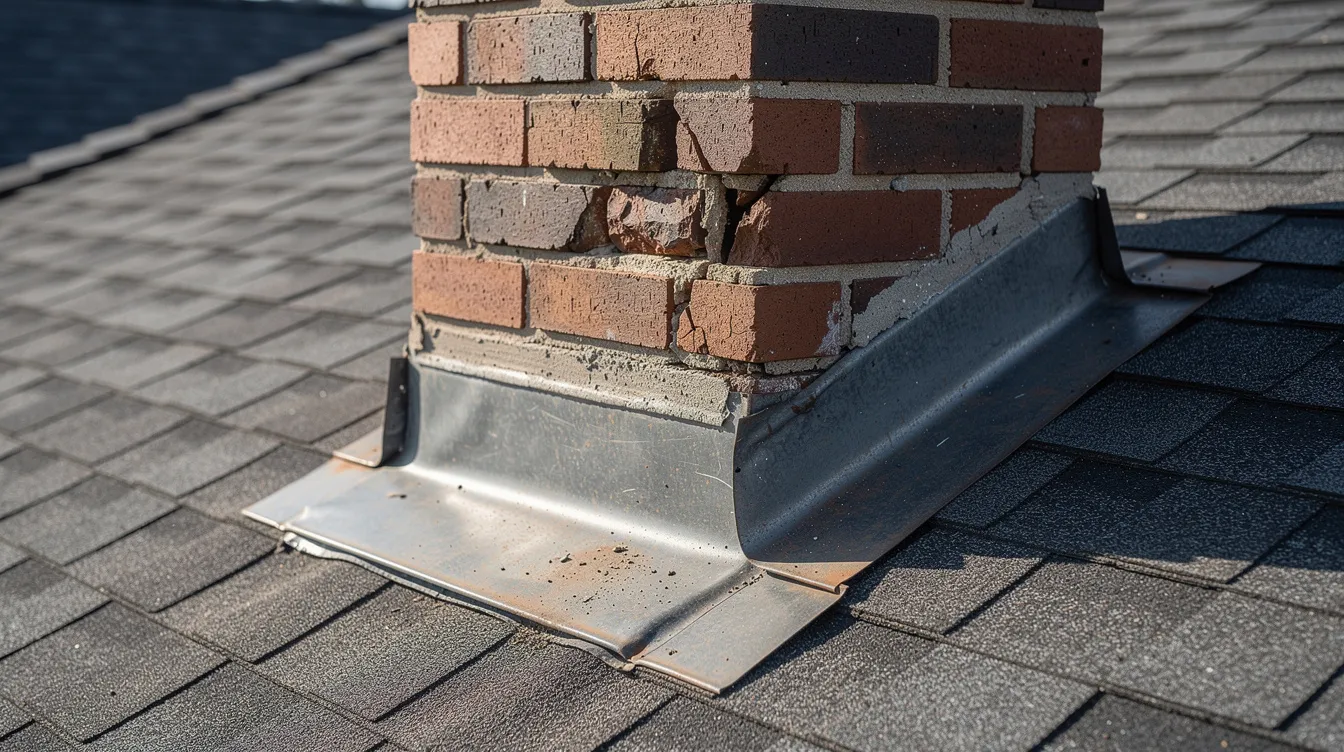
Chimney flashing and mortar joints: where metal meets brick, gaps open as caulk and mortar crack. Missing or damaged chimney caps leave the flue fully exposed.
-
Soffits and fascia boards: warped or rotting fascia creates gaps along the roofline. Aluminum soffits loosen at joints, gaining access for bats.
-
Roof vents and ridge vents: louvers rust, screens tear, and plastic housings warp in summer heat.
-
Utility penetrations: spaces around plumbing stacks, HVAC lines, and electrical conduits that pass through the roof deck.
-
Prior wildlife damage: holes first created by raccoons, squirrels, or birds often become secondary bat entry points. A raccoon removal or squirrel removal job left without full sealing can leave gaps wide enough for bats.
A ground-level inspection misses most of these. Experienced professionals use ladders, scaffolding, and sometimes thermal imaging to map all potential entry points before starting bat removal.
Do Bats Really Roost in Attics and Chimneys?
Bats roost in caves, hollow trees, and under loose bark in the wild. In urban North York, attics and chimneys replicate those conditions. A masonry chimney offers a dark vertical shaft with rough interior surfaces (flue tiles, mortar) that bats cling to easily, plus residual warmth rising from the house below.
-
Attics provide a stable, warm microclimate ideal for a maternity colony. Female bats gather in late spring, give birth in early summer, and raise pups in the attic for three to four weeks before the young can fly.
-
Chimneys serve as roost sites year-round. Big brown bats in particular may hibernate inside unused chimneys where temperatures stay above freezing.
-
Bats can live for over six years in the wild. Combined with strong homing instincts, this means a colony that finds your attic or chimney suitable will return each spring unless physically excluded and sealed out.
Even commercial buildings with flat roofs and rooftop HVAC units are not immune; bat colonies exploit parapet gaps, vent stacks, and rooftop access doors.
Seasonal Bat Activity in North York: When Problems Peak
Bat activity in the GTA follows a predictable annual cycle. Understanding it determines when exclusion methods can legally be applied.
-
April to mid-May: Bats emerge from hibernation. Adults scout for roost sites, entering attics and chimneys through gaps they used the previous year or discovering new ones. This is the first legal window for installing one-way exclusion devices.
-
Late May through August: The maternity season. Females form bat colonies in attics and give birth. Bats produce one pup every season, and those pups are flightless for roughly three to four weeks. Bats cannot be removed during their birthing season because sealing entry points while bats are inside can lead to their death; flightless pups starve.
-
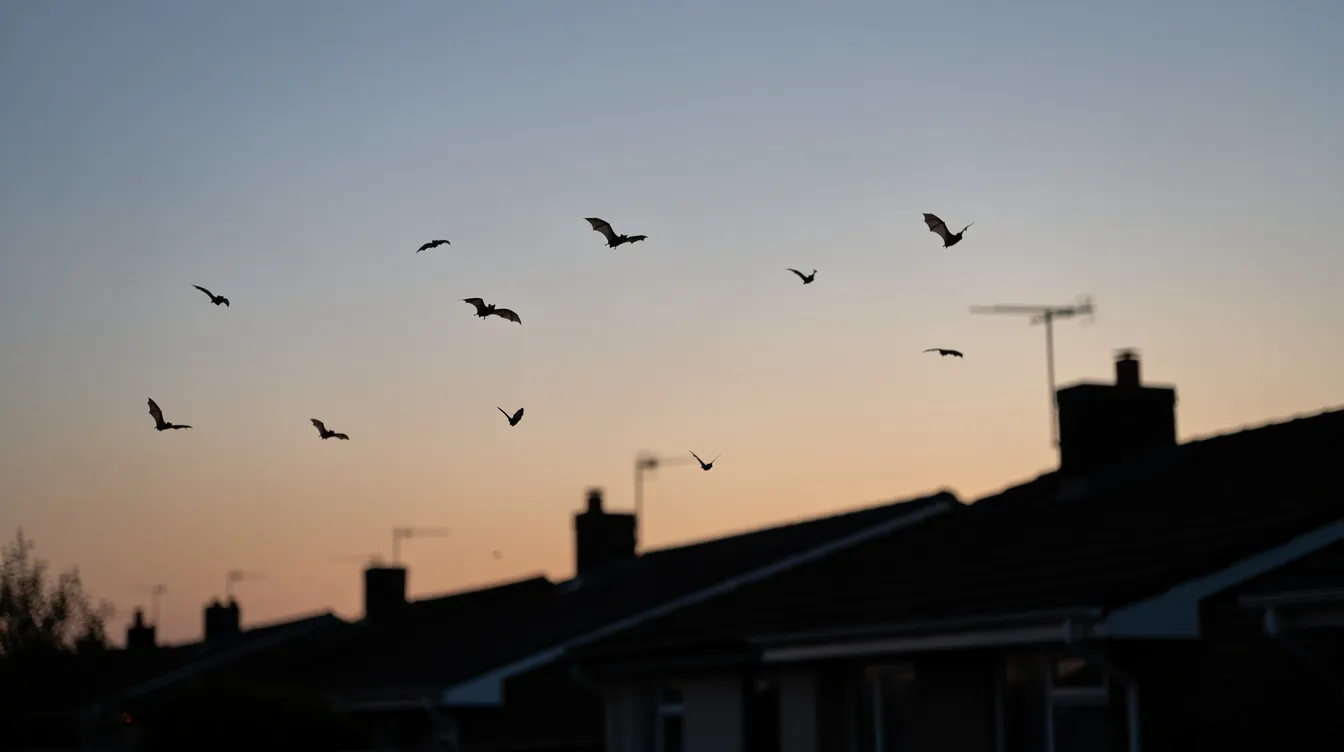
Mid-August through October: Pups can fly. This is the primary exclusion window. Experienced technicians install one-way devices and seal secondary gaps during this period. Increased bat activity at dusk, sometimes described as “swarming,” is common as bats flying around rooflines prepare for migration or hibernation.
-
November through March: Most bats hibernate elsewhere, but some overwinter in well-insulated attics or chimneys. Mid-winter sightings inside living spaces are possible if a bat wakes from torpor and wanders through wall cavities.
Clear Signs You Have Bats in Your Attic or Chimney
Early detection limits damage and exposure. A single indicator may not confirm a colony, but two or three together are a key indicator of an active roost.
-
Dusk emergence: bats flying in tight loops around your roof, chimney, or attic vents at sunset, repeatedly exiting from the same gap.
-
Bat droppings: small, dark and pebbly in appearance, accumulating on window sills, porch roofs, or masonry ledges beneath a chimney cap. Unlike rodent droppings, bat guano crumbles to powder when pressed.
-
Sounds: high-pitched chirping, squeaking, or rustling from behind walls, above ceilings, or inside the chimney, typically loudest in early evening or pre-dawn.
-
Oily streaks: bats leave oily streaks at their entry points, visible as dark smudges on brick, soffits, or around small holes. Skin oils and dirt accumulate over repeated passages.
-
Odour and staining: a strong ammonia odor indicates bat presence, caused by urine soaking into wood and insulation. Yellowish ceiling stains may appear below the roost. A musty odor persisting in the attic even after ventilation suggests significant guano buildup.
-
A bat inside your living space: a live bat appearing in a bedroom or hallway, or a dead bat found on the floor, means bats have access from the attic or chimney into the house interior. Any human or pet contact with a bat requires immediate medical consultation.
Health Risks and Damage from Bat Infestations
A bat infestation is not just a nuisance; it creates specific, documented hazards.
-
Histoplasmosis: bat droppings support the fungus Histoplasma capsulatum. When dried guano is disturbed, airborne spores become inhalable. Histoplasmosis can be contracted from bat droppings, causing respiratory illness ranging from mild flu-like symptoms to severe lung disease in immunocompromised individuals.
-
Rabies: bats can transmit rabies through bites. Not every bat is rabid, but any direct contact, including finding a bat in a room where someone was sleeping, triggers a public health protocol. Bats may bite when they feel threatened or are handled.
-
Structural damage: long-term guano and urine accumulation corrodes wood framing, stains chimney liners, and compresses attic insulation, causing significant damage to thermal performance and indoor air quality.
-
Parasites: bat mites, fleas, and ticks can migrate from a roost into living areas, creating other forms of infestation even after the bats leave.
-
Contamination persistence: odours absorb into drywall and wood beams. Without professional biohazard-level sanitation, contamination lingers and can attract future wildlife intrusions.
Humane Bat Removal: How Wildlife Control Works
Exclusion is the most effective bat control strategy and the only legal one in Ontario. Removing bats requires compliance with wildlife protection regulations; professional services ensure compliance with those laws.
-
Inspection and assessment: an experienced team conducts a thorough inspection of the roof, chimney, attic interior, and all vents and soffits. They identify the primary roost, count or estimate colony size, check for a maternity colony, and catalogue every entry and exit point.
-
One-way exclusion devices: bats can be humanely removed using one-way doors, batcones, or exclusion tubes fitted at main exit points. These devices provide a one way exit, allowing bats to leave at dusk but blocking re entry. Trapping bats is not recommended as it can worsen infestations by scattering the colony.
-
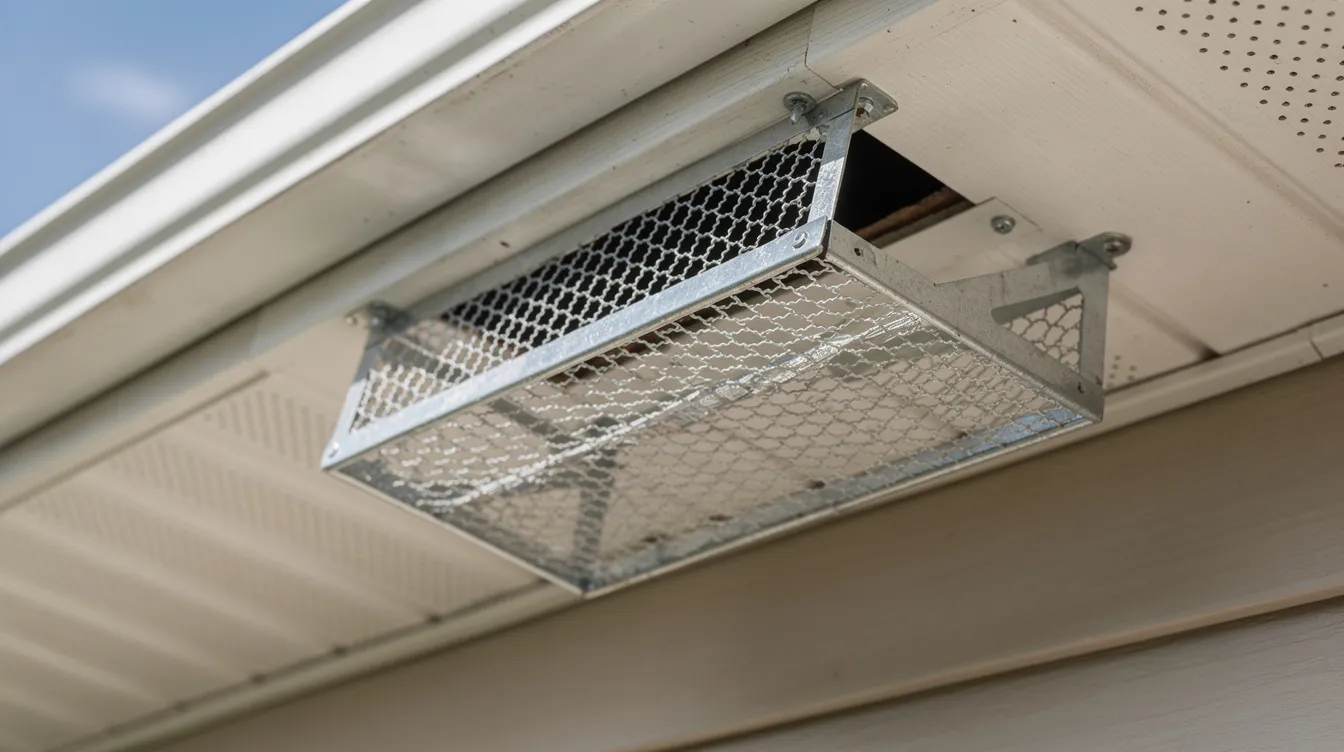
Secondary sealing: while devices are active, all other gaps, holes, and potential entry points are sealed with galvanized steel mesh, metal flashing, or masonry repair.
-
Timing: bat removal must occur outside of maternity season. Experienced professionals schedule exclusion for early spring (April to mid-May) or late summer/fall (mid-August through October), when all bats can fly.
-
Monitoring and permanent closure: after five to seven consecutive nights with no bat activity at the devices, they are removed and the final openings are permanently sealed.
Special Considerations for Bats in Chimneys vs. Attics
Chimney and attic infestations share the same root cause (gaps in the building envelope) but require different technical approaches.
Chimneys present vertical, enclosed spaces. Lighting a fire to “smoke out” bats is unsafe and can kill protected animals. Professionals inspect flue liners, smoke shelves, and chimney crowns for cracks. Properly sized chimney caps with heavy-gauge wire mesh are installed to prevent re entry. The damper should remain closed when the fireplace is not in use. A chimney that housed bats must be cleaned and inspected before any fire is lit.
Attics involve larger horizontal spaces with multiple vulnerability points. Work steps include sealing soffit gaps, screening roof vents, reinforcing weak fascia boards, and repairing damage left by raccoons, squirrels, or birds that previously breached the roofline. Bird removal and nest cleanup may be needed if other wildlife has also occupied the space.
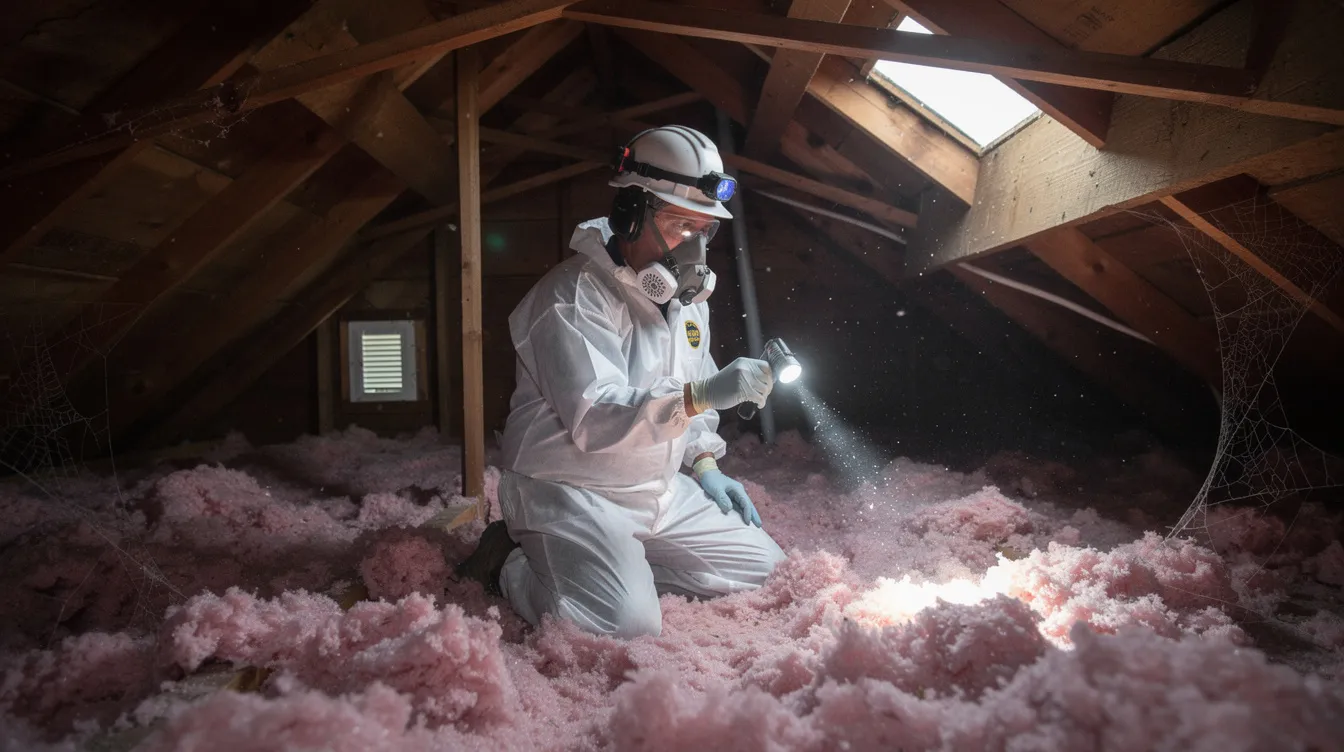
Both areas require vacuum removal of guano, HEPA filtration during cleanup, and deodorizing treatments to remove persistent odours. These steps reduce health risks for humans and discourage wildlife from returning.
Cleanup, Sanitation, and Restoring Your Attic or Chimney
Once bat removal is confirmed, the contamination left behind still poses risks. Guano cleanup must be conducted safely to eliminate health risks for occupants and workers.
-
Technicians wearing P100 respirators, disposable coveralls, and gloves remove accumulated bat guano and contaminated insulation. Materials are bagged and disposed of according to local biohazard regulations.
-
Disinfectants active against fungal spores are applied to exposed wood, masonry, and metal surfaces. Deodorizing agents neutralize ammonia from bat urine.
-
In severe cases, sections of drywall, insulation, or damaged wood framing are replaced to eliminate mould risk, odour, and structural weakening.
-
Post-cleanup verification confirms no residual droppings, no active airborne spores above baseline, and no remaining wildlife issue.
Preventing Bats from Returning to Your North York Home
Long-term prevention depends on maintaining the physical barriers installed during exclusion.
-
Seal and reinforce all potential entry points: chimney caps, vents, soffits, roofline intersections, and utility penetrations. Use materials rated for Ontario’s freeze-thaw cycles: stainless steel mesh, copper or lead flashing, and high-grade mortar.
-
Schedule annual roofline and chimney inspections, particularly after winter. New cracks and gaps appear each spring as masonry contracts and expands.
-
Trim tree branches within 10 to 15 feet of the roof to eliminate direct flight paths. Repair loose shingles, flashing, or siding promptly.
-
Consider installing bat houses on poles or trees away from the house. These provide an alternative roost and keep bats in the area to control insects without letting them back into your attic or chimney.
These preventative measures and preventive measures overlap with general animal infestation prevention. Securing your roofline against bats also reduces risk of raccoon removal or squirrel removal jobs in the future.
When to Call Wildlife Removal Services in North York
Certain situations demand immediate assistance from licensed wildlife control services:
-
Any confirmed bat in the attic, chimney, or living space where humans or pets could have had contact.
-
Large bat colonies visible at dusk (dozens of bats flying from a single exit point), which require a structured exclusion plan timed around the breeding season.
-
Extensive guano buildup, strong odours, or visible ceiling staining, where professional cleanup with HEPA filtration and biohazard sanitation is the only safe option.
-
Uncertainty about whether a maternity colony is present, which determines legal timing for exclusion.
Choose a company that uses humane practices and humane methods, provides written guarantees on exclusion work, and employs experienced professionals with proper licensing. A wildlife removal provider offering comprehensive services will handle inspection, exclusion, cleanup, and long-term sealing in a single coordinated plan.
Frequently Asked Questions About Bats in North York Attics and Chimneys
Can I just wait for bats to leave my attic on their own?
Some bats migrate away seasonally, but established bat colonies exhibit strong homing instincts and return to the same roost each spring. Waiting allows more bat guano, odour, and structural damage to accumulate. Professional exclusion using one-way devices ensures bats exit safely and cannot re enter, resolving the wildlife infestation permanently.
Is it safe to clean up bat droppings by myself?
Disturbing dry bat guano in enclosed spaces like attics can release airborne spores associated with histoplasmosis. Without a P100 respirator, HEPA vacuum, and proper containment, DIY cleanup creates real respiratory risk. Trained technicians with biohazard-grade equipment handle this work safely and dispose of contaminated materials according to Ontario regulations.
Will humane bat removal harm the bats or separate mothers from pups?
Reputable wildlife control companies time exclusion to avoid the maternity season (late May through August). Before installing one-way doors, technicians inspect the roost for flightless pups. If pups are present, work is delayed until the young can fly. This approach protects the colony and keeps homeowners in compliance with Ontario’s wildlife protection laws.
How long does bat removal usually take?
Inspection and installation of exclusion devices often happen in a single visit. Full eviction requires five to seven consecutive nights of monitoring to confirm all bats have exited. Cleanup, structural repairs, and permanent sealing may add one to three additional days depending on colony size, guano volume, and the number of entry points. A property with multiple chimneys or extensive attic damage requires more time than a house with a single roofline gap.
Are bats in my chimney a fire hazard?
Yes. Accumulated bat droppings, nest material from birds or other animals, or trapped bats can obstruct the flue. A blocked flue prevents proper ventilation and increases smoke and carbon monoxide risks, creating real fire hazards. Lighting a fire with bats or guano inside the chimney is unsafe and potentially lethal to protected wildlife. Have the bats professionally removed, then schedule a full chimney cleaning and inspection before using the fireplace again.
Heard something last night?
Call us now — same-day inspections available in most areas.